Municipal By-Laws, Naturalized Lawns, and Charter-Protected Expression
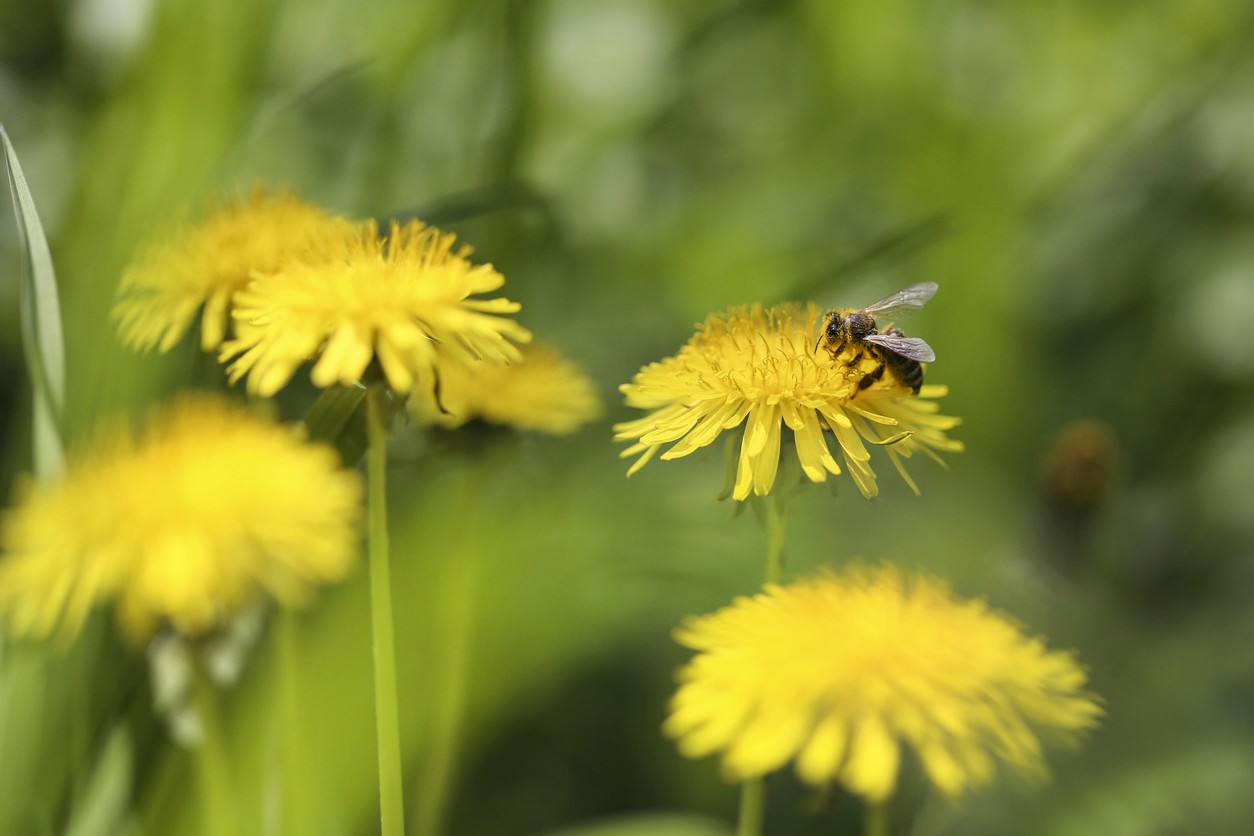


“What is a weed? A weed is a plant whose virtues have not yet been discovered.” - Ralph Waldo Emerson
Introduction
A recent Ontario Superior Court of Justice decision in Ruck v. City of Mississauga, 2026 ONSC 73 [Ruck] has brought the interplay between the Charter, municipal regulation, and environmental activism to the front lawns of Ontarians. In Ruck, the Court found sections of the City of Mississauga’s Nuisance Weeds and Tall Grass Control By-Law infringed the applicant’s freedom of expression under section 2(b) of the Charter, were not saved under section 1 as reasonable or justified, and must be struck down. The Court’s decision in Ruck is the latest chapter in the story of municipal regulation and naturalized lawns that we have discussed in previous articles, including “Making Sense of Municipal Regulation of Naturalized Lawns” and “The Courts, the Constitution, and Naturalized Lawns.”
Background
Sections 5 and 6 of Mississauga’s Nuisance Weeds and Tall Grass Control By-Law required property owners to keep their lawns free of weeds and grass taller than 20 centimetres, and to destroy and remove all listed “nuisance weeds” and their seeds (the “impugned provisions”). (Ruck at para 1.)
In 2018, Mr. Ruck began re-naturalizing his property, allowing his grass to grow over 20 centimetres, permitting wildflowers and other plants to proliferate, including two species identified as nuisance weeds under the By-Law. (Ruck at para 24.)
From 2021 to 2023, the City received multiple complaints regarding the tall grass on Mr. Ruck’s property. The City investigated each complaint and ordered that the grass be cut, and the nuisance weeds removed to bring his property into compliance with the By-Law. After Mr. Ruck failed to comply with the City’s order by the required deadline, the City hired a contractor to complete the work necessary to bring Mr. Ruck’s property into compliance and added the associated costs to his property tax bill. (Ruck at paras 25-28.)
The Application
Mr. Ruck brought an application seeking to restrain the City from enforcing the impugned provisions of the By-Law, arguing that the City’s enforcement actions breached his right to procedural fairness as well as several of his Charter rights, including his freedom of conscience and religion, his freedom of expression, his freedom of life, liberty and security of person, his right to be free from unreasonable search and seizure, and his right to the presumption of innocence. (Ruck at para 2.)
The City denied all but one claim, conceding the impugned provisions of the By-Law infringed Mr. Ruck’s freedom of expression. Despite this admission, the City argued the impugned provisions of the By-Law constituted a reasonable limit on his right to free expression under section 1 of the Charter. (Ruck at para 3.)
The Tall Grass Provisions Infringe Freedom of Expression
The Court dismissed Mr. Ruck’s arguments on procedural fairness and the majority of his Charter claims, but accepted that the impugned provisions of the By-Law infringed Mr. Ruck’s freedom of expression. Applying the three-part test under section 2(b) of the Charter, the Court concluded that:
Gardening, including cultivating a naturalized garden with tall grass and nuisance weeds, has expressive content conveying meaning that is protected under the Charter;
There was no basis to exclude this protection due to method or location of the expression, as the garden was located on Mr. Ruck’s private property and consisted of landscaping choices that embodied and communicated his environmental beliefs; and,
The purpose and effect of the impugned provisions of the By-Law prevented Mr. Ruck from expressing his environmental and conservation values and, therefore, infringed on Mr. Ruck’s freedom of expression. (Ruck at paras 42-45.)
The Impugned Provisions are not Justified under Section 1
Once the Court determined that Mr. Ruck’s freedom of expression had been infringed, the City bore the onus under the Oakes test to demonstrate that the infringement was a reasonable limit “prescribed by law”, demonstrably justified in a free and democratic society. The Court accepted that the limit was prescribed by law and that the objectives—health and safety, ecological integrity, aesthetic standards—were pressing and substantial. It also accepted that there was a rational connection between the restrictions imposed by the impugned provisions of the By-Law and these aims. (Ruck at paras 74-78.)
At the minimal impairment step of the Oakes section 1 analysis, the Court noted that the City provided no evidence of any consideration it had given to enacting by-law standards that minimally impaired the right to free expression. The Court rejected the City’s attempt to rely upon a jurisdictional scan of other municipalities, noting it was not enough to say “we are doing what everyone else is doing.” The Court found there was a lack of evidence explaining why 20 centimetres, rather than some other standard or framework, was selected, or how the specific list-based prohibition of nuisance weeds and seeds achieved the By-Law’s aims with minimal impairment of expression. (Ruck at para 81.)
On proportionality, the court found relatively serious deleterious effects on expression occurring at a person’s home—expression that sought to model ecological conservation and urban biodiversity. The Court held that since the City presented no meaningful evidence showing that the benefits of the impugned measures outweighed these deleterious effects, the sections failed the final proportionality inquiry. The infringement on Mr. Ruck’s freedom of expression could not be saved under section 1 of the Charter. (Ruck at paras 83-86.)
Remedy - The Provisions are Struck Down
Having determined that sections 5 and 6 unjustifiably infringe section 2(b) of the Charter, the Court issued a declaration under section 52(1) of the Constitution Act, 1982 that these provisions were of no force or effect to the extent of the inconsistency. The Court declined to suspend the declaration, noting the City did not argue a delayed declaration was necessary, and declined to read down or read in, given the limited legislative record and the risk of treading on the municipal legislative sphere. (Ruck at para 87.)
The Court also declined to award Charter damages, holding that the stringent “clearly unconstitutional” standard for damages was not met on the record. However, to vindicate the section 2(b) breach and restore the applicant, the court set aside the work charges the City had added to his property tax bill. The remaining elements of the application were dismissed. (Ruck at para 93.)
Significance
The Ruck decision affirms that naturalized lawns or other forms of non-traditional gardens may be a Charter-protected form of expression. The decision also emphasizes that municipalities cannot simply rely on arguing, “we are doing what everyone else is doing” to respond to claims of Charter-infringing by-law provisions.
Ruck underscores the necessity of municipalities looking critically at their yard-maintenance, property standards, or grass and weed control by-laws for potential Charter non-compliance. In particular, municipalities should consider whether the regulatory restrictions on lawn maintenance in their By-Laws are reasonably necessary to achieve their goals and, to the extent possible, minimize the impairment of residents' Charter rights to exercise their freedom of expression through gardening and yard maintenance.
Some municipalities have already taken steps to modernize their yard maintenance by-laws, adopting different approaches to strike the balance between concerns for public safety and ecological integrity. Some approaches include less restrictive regulation; others adopt a more carefully cultivated prescription of what is and is not permitted through definitions and examples. Regardless of the approach, the trend in the jurisprudence suggests it would be prudent for all municipalities to assess where and how their own by-laws may need pruning.
Share this:


disclaimer
This article shares general information and insights. It is not legal advice, and reading it does not create a solicitor–client relationship.
Environmental