

Ontario Divorce Timelines: Delays and Settlement Insights for Advisors

Insight By
Clients always ask, “How long will this legal process take?” The honest answer is that the duration depends on complexity, cooperation, and court availability. Expect a range: straightforward, uncontested files can move quickly, while contested matters that require full trials can extend for years.
Ontario’s Court Clock Reality
Advisors should be aware that current backlogs in Ontario family courts can significantly extend timelines. In many regions, securing a first Case Conference date may take up to six months after filing, and if a matter proceeds to trial, the wait can be two years or more. Complex cases involving disclosure disputes or expert reports can push that even further — sometimes by several years. These delays aren’t just procedural; they affect client planning, cash flow, and emotional resilience. Setting expectations early and emphasizing settlement as a time-control strategy is more critical than ever. I created a short video that you can share with your clients who are considering divorce:
Typical Court Roadmap
Advisors should familiarize themselves with the standard procedural milestones so they can translate legal steps into practical timelines for clients. The common sequence in Ontario divorces that go to court includes:
Case Conference
Settlement Conference
Trial Management Conference
Trial (if necessary)
Each step has its own scheduling rules and potential adjournments, and some preliminary programs, such as mandatory information or parenting programs, may be required before certain appearances.
Settlement Trends: What Advisors Should Know
Approximately 95% of family law cases in Ontario settle before trial, often through negotiation or at scheduled conferences. Many disputes are resolved at or shortly after the Case Conference, when judges provide procedural guidance and a reality check on likely outcomes. The Settlement Conference is the most critical point for resolution. At this stage, most disclosure is complete, and judges actively facilitate settlement discussions.
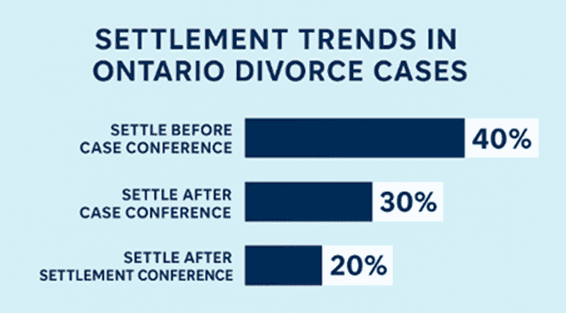
Timelines and Settlement Dynamics
Uncontested divorces and agreed family orders can be finalized in a matter of months; some guides cite timelines as short as four to six months from filing to final order in straightforward cases. Contested cases that proceed to trial can take anywhere from several months to several years, depending on the resolution of disclosure disputes, the submission of expert reports, and court scheduling.
Practical Checklist for Advisors
The following checklist highlights practical steps advisors can take to proactively manage family law files, reduce delays, and better support clients through an uncertain and often stressful process.
Set realistic expectations early. Use the client’s facts to map a best-case, likely, and worst-case timeline and document those scenarios.
Coordinate with family lawyers immediately. Early legal input can reduce procedural missteps and shorten the path to settlement.
Prioritize disclosure. Timely and well-organized financial and parenting documentation reduces delays and strengthens negotiating positions.
Plan for cash flow and liquidity. Even when a client expects a quick settlement, advise on interim needs (such as mortgage, living expenses, and expert fees) if the matter becomes protracted.
Communicating with Clients
Clear, consistent communication with clients is essential because it builds trust, aligns expectations, and enables informed decisions that directly affect timing, cost, and outcomes in a legal matter. Here are some tips for communicating effectively and keeping clients focused on what matters most.
Translate legal milestones into financial client actions. For example: “By Case Conference, we need X documents; by Settlement Conference, we should have a valuation and a negotiation mandate.”
Frame settlement as a timeline tool. Emphasize that settlement not only controls outcome but also shortens the court clock and reduces cost and emotional strain.
Document decisions and trade-offs. When clients prioritize speed over maximum recovery (or vice versa), record that instruction and the rationale.
Final Thoughts
Advisors who understand the Ontario family court process and typical timelines can translate legal processes into practical plans for clients. Early coordination with family lawyers, disciplined disclosure, and clear client communication are the most effective levers to manage time, cost, and risk.
Reach out to our Family Law team to ensure your clients receive coordinated, timely guidance that supports informed decisions and better outcomes throughout the family court process.
Share this:


disclaimer
This article shares general information and insights. It is not legal advice, and reading it does not create a solicitor–client relationship.
Family Law


